
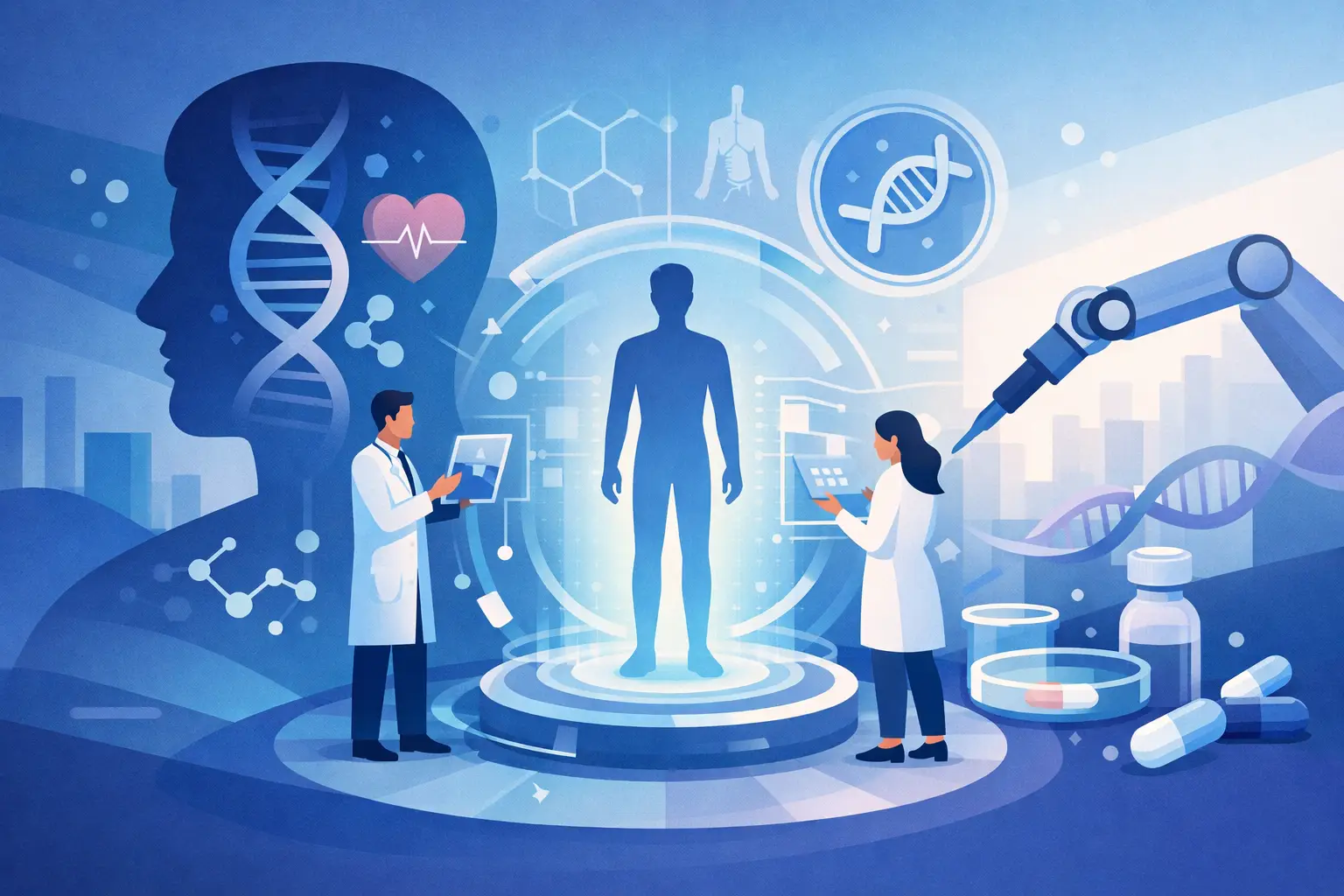
A patient comes in for persistent fatigue. One visit may lead to a lab panel, a conversation about sleep and stress, a review of medications, and questions about nutrition, mood, and life changes. Another may focus only on one symptom. The future of personalized medicine is about making the first approach more common: care that sees the full picture and uses the right information to guide the next step.
Personalized medicine is not simply a genetic test or an app that tracks your steps. At its best, it combines your medical history, current symptoms, family risks, test results, daily habits, goals, and preferences into a care plan that makes sense for your life. It gives patients and providers more ways to move from reacting to illness toward preventing problems and supporting long-term wellness.
What the Future of Personalized Medicine May Look Like
Healthcare has often been organized around separate concerns. A patient may see one provider for an annual exam, another for anxiety, another for weight management, and another for a new urgent issue. Each clinician can offer valuable expertise, but gaps can appear when no one has a clear view of how these pieces affect one another.
Personalized care aims to close those gaps. It does not mean every patient needs every test or treatment. It means the care plan should reflect what is most relevant for that individual. For one person, the priority may be managing blood pressure and reducing heart disease risk. For another, it may be addressing menopause symptoms, improving sleep, finding support for depression, or creating a sustainable plan for weight management.
In the years ahead, more care decisions will likely be informed by a broader mix of information. This can include traditional lab work and imaging, but also genetic insights, wearable-device data, medication response, mental health screening, and patterns that emerge over time. The value is not in collecting endless data. The value is in having a trusted clinical team that can explain what matters, what does not, and what to do next.
Earlier Signals, More Timely Support
Many health concerns develop gradually. Changes in sleep, energy, blood sugar, blood pressure, mood, mobility, or weight may appear before they become a more serious problem. Personalized medicine can help providers notice these patterns sooner and recommend practical support before a patient reaches a crisis point.
For example, a patient with a family history of diabetes may benefit from more focused metabolic monitoring and realistic lifestyle guidance. Someone whose anxiety is affecting sleep and appetite may need care that addresses mental and physical symptoms together. An older adult taking several medications may need regular reviews to reduce side effects and simplify treatment.
Earlier care does not guarantee that every condition can be prevented. It can, however, create more opportunities to make informed decisions, adjust a plan, and protect quality of life.
Personalized Medicine Depends on a Real Relationship
Technology will play a larger role in healthcare, but it cannot replace listening. A wearable can show a change in heart rate or sleep patterns. A lab result can identify a number outside the expected range. Neither can tell the full story without context.
A provider who knows your history can ask better questions. Is a change in weight connected to a medication, stress, thyroid function, eating habits, hormonal shifts, or a combination of factors? Is fatigue related to anemia, poor sleep, depression, chronic pain, or an acute illness? Personalization means resisting quick assumptions and looking at the whole person.
This is also why access matters. When patients can reach their care team without long delays, they are more likely to bring up concerns while they are still manageable. Same-day or next-day appointments, telehealth options, and direct communication can make personalized care feel practical rather than aspirational.
At Safe Space Clinic, integrated primary care, mental health support, wellness services, and in-house diagnostics help make those conversations more connected. Instead of treating physical and emotional health as separate tracks, care can be coordinated around the patient’s priorities.
Your Preferences Are Part of the Plan
The right medical plan is not always the most intensive one. Some patients want detailed data and frequent follow-up. Others need a simple plan that fits a demanding work schedule, caregiving responsibilities, limited mobility, or a fixed budget. Both preferences deserve respect.
Personalized medicine should include shared decision-making. Your provider can explain the potential benefits, limitations, costs, and risks of an option. You can discuss what feels realistic and what outcomes matter most to you. A plan works better when it is medically appropriate and possible to follow.
This is especially relevant for preventive care. There is no one perfect approach to improving health. One person may begin with nutrition counseling and regular movement. Another may need medication management, behavioral health support, or additional testing. Progress can be measured in many ways, including better energy, fewer symptoms, improved lab values, greater confidence, or the ability to do more of what you enjoy.
The Promise and Limits of Health Data
Genetics, artificial intelligence, remote monitoring, and digital health tools are often presented as if they will deliver precise answers for everyone. These tools can be helpful, but they require care and perspective.
Genetic testing may reveal an increased risk for certain conditions, but risk is not destiny. A genetic result may be useful when it changes screening decisions, medication choices, or family planning conversations. In other situations, it may not provide an answer or may create uncertainty that needs thoughtful counseling.
Artificial intelligence may help clinicians identify patterns, organize records, and flag potential concerns. It can support care, but it should not replace clinical judgment or a patient’s voice. Algorithms can reflect gaps in the data used to build them, and they may not capture the realities of a person’s culture, stressors, financial situation, or ability to access care.
Privacy also matters. Patients should understand what information is being collected, how it is stored, and who can see it. Asking questions is appropriate. Personalized medicine should give patients more agency, not make them feel monitored or overwhelmed.
How to Prepare for More Personalized Care
You do not need advanced testing to start receiving more individualized care. A productive appointment often begins with clear information and honest conversation. Share changes in your symptoms, sleep, mood, medications, supplements, family history, and daily routine. Mention goals that may not show up on a standard intake form, such as having more energy for your children, reducing worry about a health risk, or staying independent as you age.
It can also help to keep a brief record before your visit if symptoms come and go. Note when they started, what makes them better or worse, and whether they affect work, relationships, appetite, or sleep. Bring questions about any test or recommendation, including what it could tell you, what it cannot tell you, and how the result would change your care.
Most of all, look for continuity. Personalized care becomes more meaningful over time, as your provider can compare changes, recognize patterns, and help you adjust without starting over at every appointment.
A More Human Direction for Healthcare
The future of personalized medicine will include more sophisticated tools, but its most meaningful progress may be simpler: patients feeling known, heard, and supported before small concerns become larger ones. The best care will pair clinical insight with compassion, clear communication, and a plan that respects the realities of everyday life.
Your health is more than a collection of numbers or isolated symptoms. Bringing your full story into the conversation is one of the most practical steps you can take toward care that helps you feel better and live better.




 Book Your Appointment Today and Start Feeling Better Appointments available No waits time