
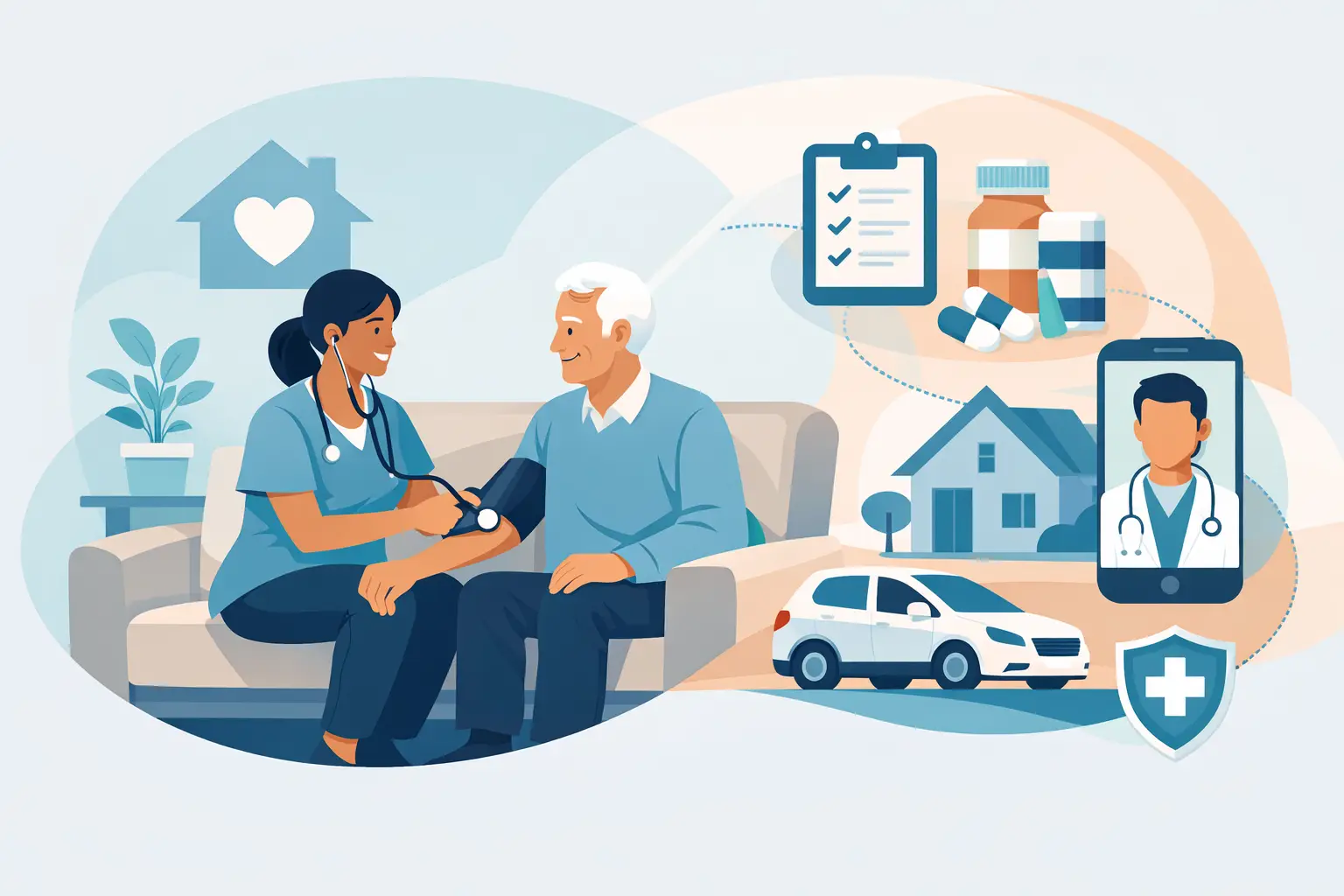
A lingering cough, a medication question, rising stress, and an overdue annual exam may seem like separate problems. Without a consistent place to turn, they can also mean separate appointments, repeated paperwork, and advice that does not always connect. Home base primary care is designed to change that experience by giving you a trusted clinical relationship for the health concerns that come up across everyday life.
What Does Home Base Primary Care Mean?
Home base primary care is not simply a clinic you visit once a year. It is a central point for your healthcare: a place where a care team knows your history, helps you stay ahead of preventable concerns, and can respond when something new arises.
For many people, primary care includes annual physicals, screenings, vaccinations, medication refills, and treatment for common illnesses. A true home base can do more. It can connect those routine needs with chronic condition support, mental health conversations, weight-management goals, reproductive health, and the practical questions that arise between appointments.
The idea is straightforward: instead of trying to manage your health through disconnected specialists, urgent care visits, and online searches, you begin with a provider who sees the broader picture. When a referral or specialty care is needed, your primary care relationship still serves as an informed starting point.
Home base care does not necessarily mean care delivered in your home. It refers to having a reliable healthcare “home” where your needs, goals, and records can be understood in context. Some practices may also offer telehealth, which can make that relationship easier to maintain from home, work, or while traveling.
Why One Ongoing Care Relationship Matters
Healthcare can become fragmented quickly. You may see one provider for a sinus infection, another for anxiety, a third for weight concerns, and a fourth for preventive testing. Each provider may offer helpful care, but the full story can be harder to see when information, medications, and recommendations are spread across multiple settings.
A home base primary care provider can help identify patterns. For example, fatigue may relate to sleep, stress, nutrition, a medication change, thyroid concerns, anemia, or another issue that deserves evaluation. Treating only one symptom without asking broader questions can leave patients feeling unheard or stuck.
Continuity also supports better decision-making over time. Your provider can compare new symptoms with your baseline, monitor whether a treatment is helping, and adjust the plan before a small concern becomes more disruptive. For adults managing blood pressure, diabetes risk, migraines, menopause symptoms, depression, or several medications, that familiarity can be especially valuable.
Just as important, a trusted care relationship creates room for honest conversations. Many people delay care because they worry about being judged for their weight, mood, habits, sexual health, or difficulty following a previous plan. Compassionate primary care makes it easier to speak openly, ask questions, and take the next realistic step.
What Your Primary Care Home Base Can Help Manage
Your needs will change over time, and your care should be able to change with you. A comprehensive primary care practice may help with preventive care and wellness planning, acute illnesses and minor injuries, ongoing management of chronic conditions, medication review, and health concerns that need timely answers.
Preventive care is one of the most meaningful parts of the relationship. Annual exams, age-appropriate screenings, laboratory testing, and immunizations can help identify concerns before symptoms become severe. Preventive visits are also a practical time to discuss sleep, energy, nutrition, exercise, family history, and changes you may have been putting off mentioning.
When you are sick, access matters just as much as expertise. A sore throat, urinary symptoms, a rash, nausea, a sprain, or a possible infection may need prompt attention. Same-day or next-day appointments can reduce the stress of deciding whether a problem can wait, while in-house diagnostics such as labs, EKGs, X-rays, or ultrasound can help clarify what is going on without adding unnecessary steps.
Mental health belongs in the same conversation. Anxiety, depression, grief, attention concerns, insomnia, and burnout can affect physical health, relationships, and the ability to manage other conditions. Coordinated primary and psychiatric care can make it easier to consider the whole person rather than treating emotional and physical symptoms as unrelated.
Access Is Part of Good Care
A primary care relationship only works when you can actually use it. Long waits, limited appointment availability, and unclear costs often lead people to postpone routine care until a concern feels urgent. By then, the visit can be more stressful and the options may be more limited.
Look for a practice that explains how patients can reach the care team, how quickly appointments are typically available, and what happens after hours. Telehealth can be especially helpful for follow-ups, medication discussions, mental health check-ins, and concerns that do not require an in-person exam. In-person availability remains essential when you need a physical evaluation, testing, imaging, or a procedure.
Direct-care membership models can make access more predictable for some patients. At Safe Space Clinic, Safe Space Direct provides unlimited zero-copay visits, rapid appointment access, 24-hour provider availability, annual preventive services, and discounts on testing and imaging. This model may be a good fit for people who want a clearer relationship with their healthcare costs and fewer barriers to reaching their provider.
Membership care is not the right financial choice for every person. It depends on your insurance coverage, expected healthcare needs, preferred specialists, and budget. The key question is whether the arrangement makes it easier for you to get consistent care rather than avoiding it.
How to Choose the Right Care Home Base
The best primary care practice is not defined by a single service. It is defined by whether the experience supports your real life. Before choosing a provider, consider whether they offer the types of care you need now and are likely to need later. A healthy 30-year-old with a busy work schedule may prioritize fast scheduling and telehealth. Someone managing several conditions may place more value on diagnostics, medication coordination, and longer-term follow-up.
It also helps to ask how the practice approaches mental health and wellness. Some offices focus mainly on short visits for immediate medical issues. Others are equipped to coordinate psychiatric care, explore lifestyle factors, and create an individualized plan alongside traditional medical treatment. Neither model is automatically better, but the right fit depends on what support you want from your primary care relationship.
Pay attention to communication, too. You should understand how to request refills, receive test results, ask follow-up questions, and get help when symptoms change. Clear expectations reduce frustration and help you use care before a concern becomes a crisis.
Making the Most of Your First Visit
Your first appointment is a chance to set the foundation for future care. Bring a current medication list, including supplements, and share any recent test results or records you have available. Be ready to discuss your health history, family history, past surgeries, allergies, and the goals that matter most to you.
Those goals do not need to be dramatic. You may want to have more energy, reduce the number of sick days you take, sleep better, understand a recurring symptom, manage your weight without shame, or feel more supported with anxiety. Clear goals help your provider recommend a plan that feels practical instead of overwhelming.
If you have more than one concern, say so at the start of the visit. Your provider can help prioritize what needs attention first and schedule appropriate follow-up for everything else. Good care is not about solving every issue in one appointment. It is about creating a plan that keeps moving you forward.
A strong healthcare home base gives you a place to begin when you feel well, when something changes, and when life feels complicated. Choosing a provider who listens, coordinates care, and offers timely support can make caring for your health feel less like another burden and more like a path toward feeling better.




 Book Your Appointment Today and Start Feeling Better Appointments available No waits time