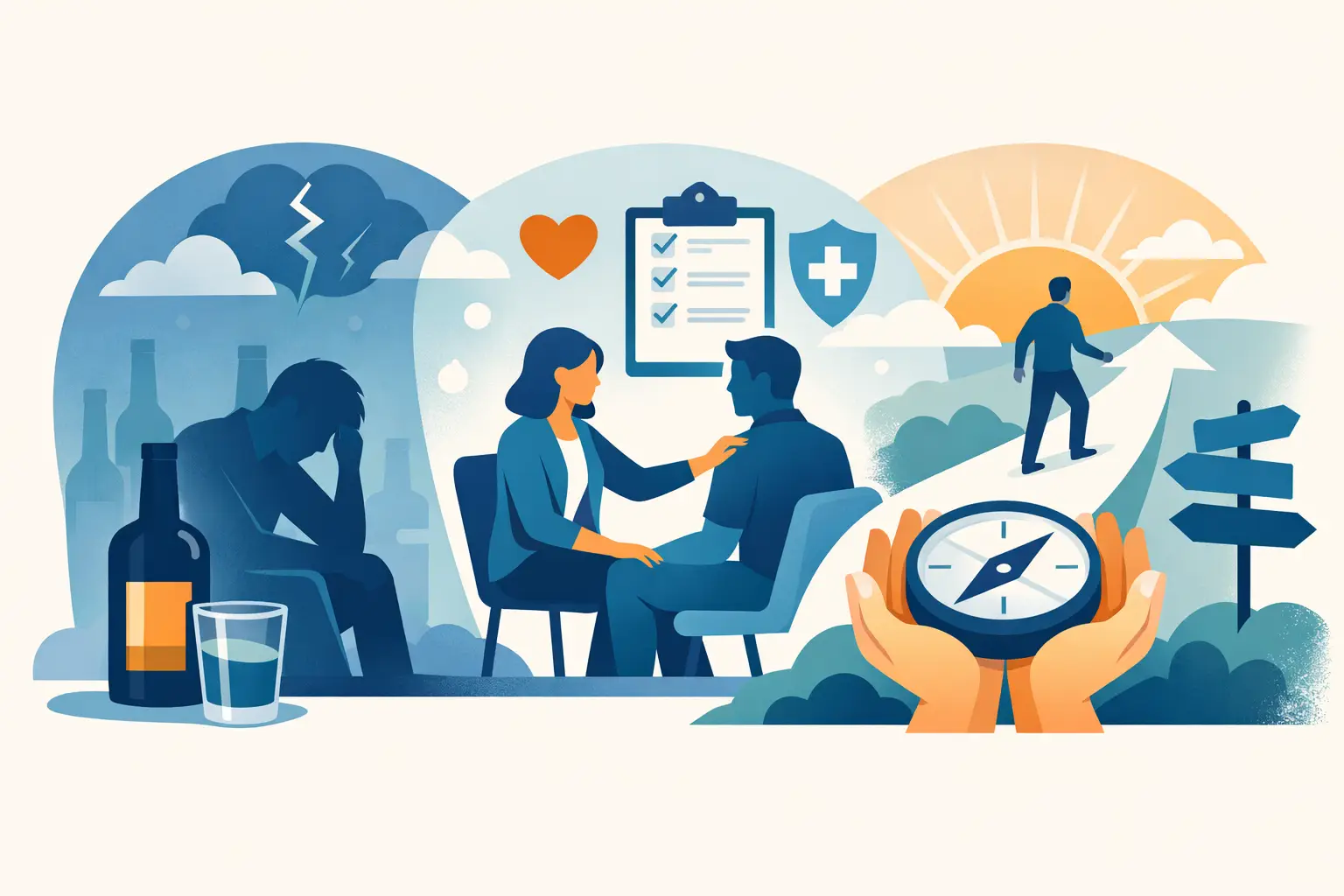
A drink may begin as a way to relax after work, sleep more easily, manage grief, or feel comfortable in social settings. When alcohol starts taking more than it gives – affecting health, relationships, work, finances, or peace of mind – it may be alcohol use disorder. This is a medical condition, not a personal failure, and compassionate care can make a meaningful difference.
Alcohol use disorder can look different from one person to another. Some people drink every day. Others go days or weeks without drinking but lose control once they start. The shared concern is not a single number of drinks. It is the pattern of alcohol use, the consequences it creates, and the difficulty cutting back despite wanting to.
What Is Alcohol Use Disorder?
Alcohol use disorder, often called AUD, is a condition in which a person has trouble controlling alcohol use even when it is causing harm or distress. It can range from mild to severe. A diagnosis is made by a qualified clinician based on symptoms over time, not on stereotypes about what a person who struggles with alcohol is supposed to look like.
Many people with AUD hold jobs, care for families, attend social events, and appear to be functioning well from the outside. That can make it harder to recognize when support is needed. It can also lead people to wait until a crisis before reaching out. Earlier care can help prevent alcohol-related health concerns from becoming more serious.
AUD often overlaps with anxiety, depression, trauma, chronic pain, sleep problems, and major life changes. Sometimes alcohol use develops as an attempt to cope with those experiences. Effective treatment addresses both the drinking pattern and the underlying reasons alcohol has become difficult to manage.
Signs Alcohol May Be Becoming a Problem
A single difficult night does not necessarily mean someone has alcohol use disorder. A pattern is more meaningful. It may be time to talk with a healthcare professional if alcohol use is regularly causing concern, conflict, or loss of control.
Common signs include drinking more or longer than intended, repeatedly trying to cut down without success, and spending a significant amount of time drinking or recovering from drinking. A person may feel strong cravings, need more alcohol to get the same effect, or continue drinking despite problems with mood, sleep, relationships, work, or physical health.
Other warning signs can be more subtle. You may plan your day around when you can drink, avoid activities where alcohol is unavailable, make excuses for drinking, or feel increasingly anxious about the idea of stopping. Loved ones may notice changes in irritability, memory, energy, or reliability before the person drinking sees the pattern clearly.
The question is not whether someone has reached a particular “rock bottom.” A more useful question is: Is alcohol getting in the way of the life, health, or relationships you want?
Why Medical Support Matters
Alcohol affects far more than the liver. Over time, heavy or frequent drinking can contribute to high blood pressure, heart rhythm problems, digestive symptoms, liver disease, weakened immunity, falls, injuries, sexual health concerns, and changes in memory or concentration. It can also worsen anxiety and depression, even when alcohol initially seems to bring temporary relief.
A primary care visit can be a practical starting point. A clinician can review alcohol use in a private, nonjudgmental conversation; assess overall health; discuss medications; and recommend lab work or other testing when appropriate. This helps create a plan that reflects the whole person, including sleep, mental health, nutrition, other medical conditions, and daily responsibilities.
For many people, care does not require putting life on hold. Telehealth appointments, timely follow-up, and a consistent provider relationship can make it easier to ask questions and stay connected to support. At Safe Space Clinic, integrated primary and mental health care can help reduce the burden of coordinating separate concerns across multiple offices.
Do Not Stop Suddenly Without Advice if Withdrawal Is Possible
For a person who drinks heavily or regularly, suddenly stopping can be dangerous. Alcohol withdrawal may begin within hours after the last drink and can include shaking, sweating, nausea, headache, anxiety, trouble sleeping, a fast heartbeat, and increased blood pressure.
More severe withdrawal can cause hallucinations, seizures, severe confusion, agitation, or delirium tremens. These symptoms are medical emergencies. Call 911 or seek emergency care immediately for seizures, hallucinations, severe confusion, fainting, chest pain, trouble breathing, or any concern that someone may be in life-threatening withdrawal.
The safest approach depends on how much and how often a person drinks, whether they have had withdrawal before, their medical history, and whether other substances or medications are involved. A healthcare professional can help determine whether outpatient support is appropriate or whether medically supervised withdrawal care is needed. This is one reason not to rely on willpower alone.
Treatment for Alcohol Use Disorder Is Personalized
There is no single right recovery path. Some people want to stop drinking completely. Others may begin by reducing use, building safer routines, and reassessing with their care team. Abstinence is often recommended when alcohol has caused serious health consequences, loss of control, or dangerous withdrawal, but goals should be discussed honestly and without shame.
Treatment may include counseling, medication, recovery support groups, peer support, and care for related anxiety, depression, trauma, or sleep concerns. Several prescription medications can reduce cravings or help support abstinence for some patients. They are not a shortcut, and they are not right for everyone, but they can be a valuable part of evidence-based care.
Behavioral therapy can help a person identify triggers, practice coping skills, repair routines, and prepare for high-risk situations. Triggers vary widely. They may include stress, loneliness, celebrations, conflict, certain friends or locations, pain, or the quiet period at the end of a demanding day. Knowing your triggers is useful, but having a specific plan for them is what makes change more sustainable.
A plan might include removing alcohol from the home, arranging a check-in during difficult times, changing an after-work routine, keeping nonalcoholic drinks available, or scheduling regular therapy and medical follow-up. Small environmental changes can reduce the number of decisions someone has to make when cravings are strong.
How to Start the Conversation
Many people delay care because they fear being judged, pressured, or labeled. A good clinical conversation should feel respectful and straightforward. You do not need to arrive with perfect answers or a firm commitment to a particular outcome.
It can help to write down what you have noticed: how often you drink, how much you typically drink, times you tried to cut back, symptoms that occur when you do not drink, and how alcohol has affected sleep, mood, health, or relationships. Be honest about other medications and substances as well. This information helps a provider recommend care that is safe.
If you are concerned about someone you love, choose a calm, private moment rather than raising the issue during an argument or while they are intoxicated. Focus on specific observations and care rather than accusations. “I have noticed you seem more anxious and are drinking most nights. I am worried about you” is more likely to open a conversation than criticism or ultimatums.
You can offer to help make an appointment, provide transportation, or sit nearby during a telehealth visit if they want support. Still, treatment works best when the person has room to make their own decisions. Boundaries may also be necessary, particularly if alcohol use is affecting safety at home.
Progress Is More Than a Perfect Streak
Recovery is rarely a straight line. A return to drinking after a period of change can feel discouraging, but it does not erase progress or mean treatment has failed. It is information: something in the plan may need more support, a different strategy, or closer attention to stress and mental health.
The next helpful step may be as simple as telling a trusted provider the truth about what is happening. You deserve care that sees the full picture, protects your safety, and helps you move toward steadier health one day at a time.


 Book Your Appointment Today and Start Feeling Better Appointments available No waits time