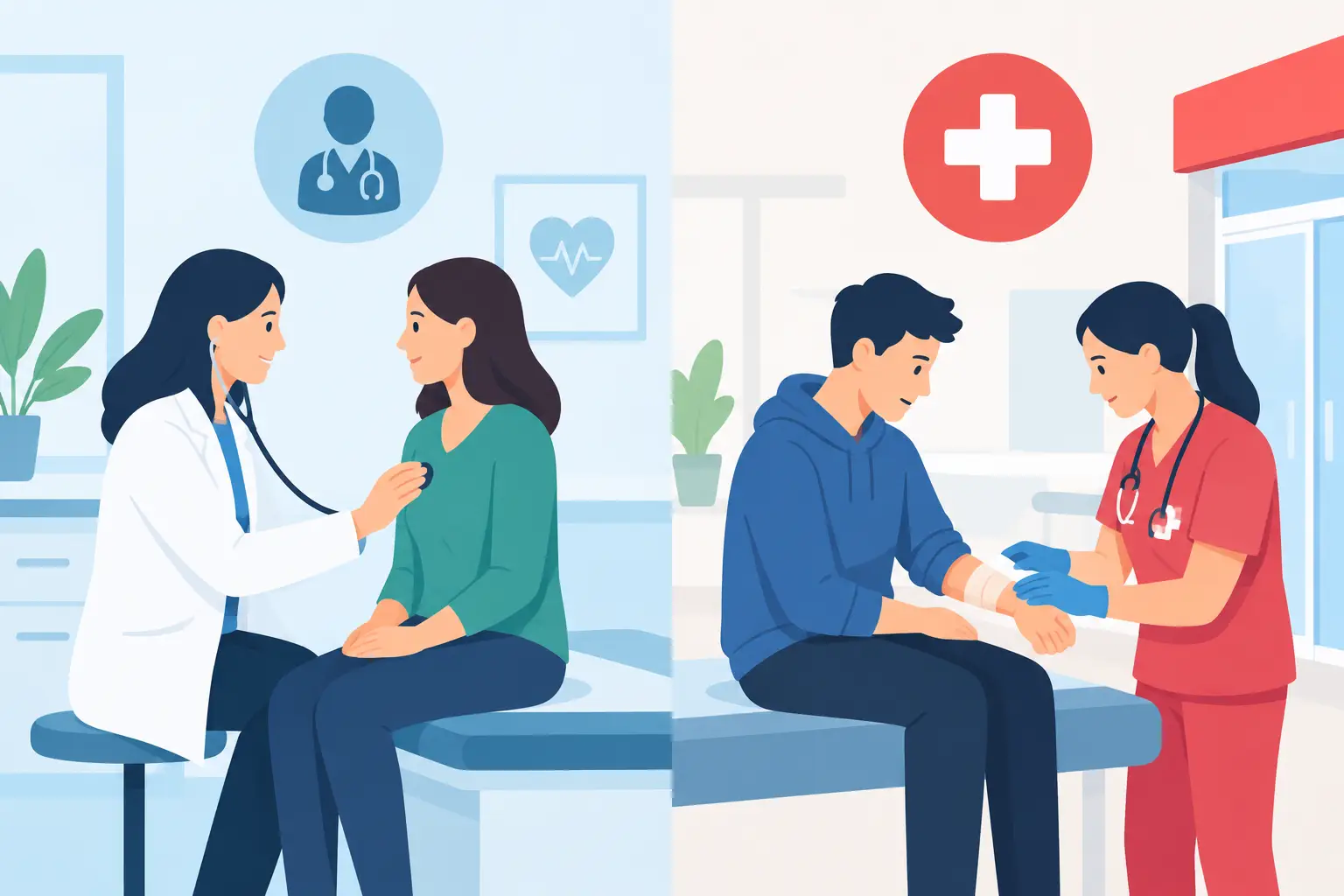
A sore throat that will not quit, a sudden rash, a prescription that needs renewing, or blood pressure readings that are climbing can all leave you asking the same question: where should I go? Understanding primary care versus urgent care helps you choose care that fits the moment while keeping your long-term health on track.
Both settings can treat many common health concerns. The difference is not simply whether a problem feels serious. It is about the type of support you need, how quickly you need it, and whether your care requires an ongoing relationship with a clinician who knows your health history.
Primary Care Versus Urgent Care at a Glance
Primary care is your home base for health. A primary care clinician helps you prevent illness, manage chronic conditions, address new symptoms, coordinate specialists when needed, and make sense of the many parts of your physical and mental health. The relationship develops over time, which means your care can reflect your medical history, medications, goals, family history, and preferences.
Urgent care is designed for prompt evaluation of non-life-threatening problems that cannot reasonably wait for a routine appointment. It can be a practical choice when you have an acute concern outside your primary care office hours or need a same-day assessment for a straightforward illness or injury.
The best choice often depends on access. If your primary care practice offers same-day or next-day visits, many issues people associate with urgent care can be handled by the team that already knows them. That can mean less repetition, clearer follow-up, and a more complete view of what may be contributing to your symptoms.
When Primary Care Is the Better Fit
Primary care is usually the right starting point for preventive needs, ongoing symptoms, and health concerns that benefit from context. Annual physicals, screenings, vaccinations, medication management, lab review, weight management, hormone concerns, anxiety, depression, menopause symptoms, and chronic disease care all belong here.
It is also a strong choice when a problem is not an emergency but keeps returning. Frequent headaches, recurring urinary symptoms, ongoing fatigue, stomach discomfort, sleep changes, joint pain, or repeated sinus infections may need more than a quick treatment. Your clinician can look for patterns, review possible triggers, order appropriate testing, and create a plan that goes beyond short-term relief.
Primary care can be especially valuable when physical and emotional health overlap. Stress can worsen sleep, blood pressure, digestive symptoms, and pain. Depression or anxiety may affect energy, appetite, motivation, and medication adherence. A coordinated practice can address these concerns with compassion rather than treating them as separate problems.
The advantage of continuity
A clinician who has followed your care can recognize what is new, what has changed, and what has already been tried. They can see whether a new symptom may relate to a medication, an existing condition, a recent life change, or a previous test result.
Continuity also matters after an acute illness. If you are treated for bronchitis, a sprain, or a urinary tract infection, your primary care team can check whether you are improving, adjust treatment if needed, and help prevent the concern from becoming a cycle of repeat visits.
When Urgent Care Makes Sense
Urgent care can be appropriate for illnesses and minor injuries that need attention quickly but are not life-threatening. Common reasons include a painful ear infection, strep-like symptoms, flu or COVID-19 symptoms, uncomplicated urinary symptoms, a minor cut that may need stitches, a simple sprain, mild allergic reactions, or a new rash.
It is often useful when your regular clinician is unavailable, you are traveling, or symptoms begin after hours. The goal is timely care for a problem that should not wait several days.
Still, urgent care has limits. Clinicians there may not have your complete medical record, know your medication history, or have the time and setting to investigate a complex concern. They may focus appropriately on the immediate issue, but follow-up with your primary care clinician is often the next important step.
Same-day primary care can bridge the gap
The line between primary care and urgent care is not always rigid. A well-equipped primary care practice with rapid appointments can often evaluate acute concerns while preserving the benefits of continuity. In-house testing, imaging, EKGs, office procedures, and telehealth can make that possible for many common conditions.
At Safe Space Clinic, same-day or next-day access is designed to help patients get prompt support without losing the relationship-based care that helps their health plan stay connected. For members, direct access and zero-copay visits can also make it easier to seek help early, before a manageable concern becomes more disruptive.
When to Choose the Emergency Room Instead
Neither primary care nor urgent care is the right setting for every problem. Call 911 or seek emergency care right away for symptoms such as chest pain or pressure, trouble breathing, signs of stroke, sudden confusion, fainting, severe bleeding, a serious head injury, seizures, severe allergic reactions with swelling or breathing trouble, or thoughts of harming yourself or someone else.
Trust your instincts if something feels profoundly wrong, especially if symptoms are sudden, severe, or rapidly worsening. It is always reasonable to seek emergency help when safety is uncertain.
How to Make a Confident Choice
Start by asking three practical questions. Is this potentially life-threatening? If yes, emergency care is the answer. Does it need attention today because of pain, fever, an injury, or a rapidly changing symptom? Urgent care or a same-day primary care appointment may fit. Has this been ongoing, recurring, connected to other health concerns, or likely to require follow-up? Primary care is usually the better place to begin.
Your personal health history changes the decision, too. A fever may be manageable for one person but more concerning for someone who is pregnant, immunocompromised, very young, older, or living with complex chronic conditions. When you are unsure, call your primary care office and describe what is happening. A clinical team can help guide you to the right level of care.
Getting More From Every Visit
Whether you visit primary care or urgent care, bring or share a current medication list, allergies, major diagnoses, and details about when symptoms started. If you have home readings such as blood pressure, temperature, blood sugar, or pulse, those details can help. Photos can also be useful for a rash, swelling, or a symptom that comes and goes.
After an urgent care visit, let your primary care team know what happened. Ask for follow-up if symptoms do not improve as expected, if you receive an abnormal test result, or if the same issue returns. This simple handoff helps prevent fragmented care and gives your clinician a more complete picture of your health.
The goal is not to choose one type of care forever. It is to have the right support at the right time, with a trusted care team ready to help you feel heard, informed, and cared for when questions arise.




 Book Your Appointment Today and Start Feeling Better Appointments available No waits time